The Little Mermaid Breaks Free

Updated: May 15

Contrary opinion: Disney movies are not about family values. Instead, they’re about embracing individuality and rebelling against the family / the village / the societal rules that conspire to destroy individual expression. And that’s why they’re so popular. Because as Americans, we’re all essentially rebels and renegades inside. In this sense, Disney is the ultimate expression of the American value of individualism. Granted, they are “family friendly” in the sense that they’re not violent or laced with profanity, but it’s fair to say that they repeatedly place the aspirations of the individual hero above the family or group pressures for conformity.
In almost every Disney movie, the early plot structure sets up a conflict between the wishes of the hero and the social pressure of the family or village. In The Little Mermaid, Ariel wants to leave the ocean and explore the mainland, but her father, Triton, is opposed to this plan. In Aladdin, Jasmine wants to escape from her castle and marry whomever she chooses. Her father, the sultan and ruler of Agrabah, strongly opposes this in favor of Jasmine marrying a prince that is suitable to him. In Moana, the lead character wants to leave her island and embark upon a hero’s journey of self-discovery, but her father Chief Tui is opposed. In Pocahontas, the protagonist wants to choose her own romantic partner (namely, John Smith), but her father Chief Powhatan wants her to marry (the ripped and studly) Kocoum. For Mulan, it’s the very same conflict, as she laments in the ballad, “Reflection:”
“Look at me, I will never pass for a perfect bride
Or a perfect daughter
Can it be, I'm not meant to play this part?
Now I see, that if I were truly to be myself
I would break my family's heart”
Compare these lyrics with “How Far I’ll Go,” from Moana, where the protagonist is describing the same conflict between being a “perfect daughter” on the one hand, and being the person that she herself would like to be, on the other hand:
“I've been staring at the edge of the water
Long as I can remember, never really knowing why
I wish I could be the perfect daughter
But I come back to the water, no matter how hard I try”

This classic battle between individual freedom and group / family pressures for conformity is echoed in Star Wars, where Luke Skywalker desperately wants to leave the family farm of Tatooine, and embark upon a journey of adventure, despite the protests of his uncle Owen, which is captured in this iconic scene with the Tatooine double sunset:

Why does this scene resonate so much? And why does Disney constantly return to the same plot structure, creating a tension between the individual hero’s aspirations on the one hand, and the family / group pressures for conformity on the other? Disney wants their films to be successful, and they know this is a universal message that strikes a chord – not only with an American audience – but with a larger, global audience. Could it be that this tension between individual aspirations and group conformity cuts to the very core of the human experience, and thereby strikes a universal chord – because everybody can relate to this? Who doesn’t, at some point in their life, feel trapped by social or family pressures & expectations that seem intent upon snuffing out the fire of free expression and individuality?
We’re all part of a larger community, and very often that larger community demands the capturing of our identity in the service to a larger collective expectation or standard. And so we rebel in the cause of freedom and self-preservation. And that’s what Disney movies are all about. Disney is basically telling your family to go bugger off.
This tendency has of course been noted by writers past. Here’s Emerson:
“To be yourself in a world that is constantly trying to make you something else is the greatest accomplishment."
Joseph Campbell echoed that same sentiment:
“The privilege of a lifetime is being who you are.”
In fact, Campbell’s work deeply influenced George Lucas in the writing and framing of Star Wars, and it was Campbell who interpreted the conflict between Luke Skywalker and Darth Vader as the symbolic archetypal conflict between the rebel individualist in Skywalker and the dark and powerful machine state of conformity in Vader.

“I’ll never join you!” is Skywalker shaking his (remaining) fist, declaring that he won’t let his personality be consumed by the machine. He won’t go “work for the man,” as Joseph Campbell similarly expressed about himself:
"In my own life, I've had many opportunities to commit myself to a system and to go with it, and to obey its requirements. My life has been that of a maverick; I would not submit."
Disney and Star Wars have both struck a nerve because they’re speaking to something so true and relevant in our society: we all want to be ourselves – to be free – but we often can’t afford that luxury because so many of us must submit and submerge our individual freedom to the powerful and dark machinery of commerce and conformity. Our right hands have already been severed by the Darth Vader-like pressures of survival in corporatist America, and we’re left holding onto the gantry of 9-5 living, fearful of taking the plunge into the unknown abyss of freedom. Will Leia and Chewbacca (by way of the “force”) be there to save us in their own Millennium Falcon, should we take that leap of faith?
There are Darth Vader-like monolithic, corporatist, political thought bubbles that often demand our loyalties in the U.S., and it’s the American way to resist these currents and strike out on our own as rugged individualist thinkers-for-ourselves. I don’t know what is more uniquely American than the expression, “Don’t tell me what to think!” We are a fiercely independent people; thus, when Frank Sinatra introduced his legendary version of “My Way,” he referred to it as the “National Anthem.”
Democrats, Republicans, Independents, Libertarians, Green Party – perhaps the only thing we can all agree on is Frank Sinatra – and the message of that song:
“For what is a man, what has he got?
If not himself, then he has naught
Naught to say the things that he truly feels
And not the words of someone who kneels
The record shows I took all the blows
And did it my way!”
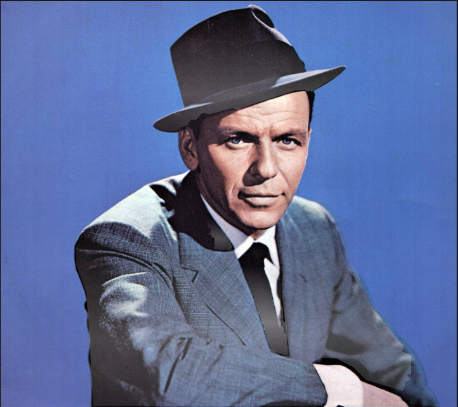
This is what Disney and Star Wars and American Culture are all about: expressing your opinion no matter what and not kneeling before some monolithic thought bubble ideology that tells you what to think and feel about your life, and that’s why we cheer for Moana, Ariel, Mulan, Jasmine, and Pocahantas when they tell their families to go suck it – and they go and break out of the rigid and dogmatic social structures that were holding them at bay in their little villages. This is the message of “Let it Go” in Frozen:
“Don't let them in, don't let them see
Be the good girl you always have to be
Conceal, don't feel, don't let them know
Well, now they know
Let it go, let it go
Can't hold it back anymore
Let it go, let it go
Turn away and slam the door
I don't care what they're going to say
Let the storm rage on
The cold never bothered me anyway”

I think collectively, American culture is in the midst of its own “Let it Go” moment, as free-minded and fiercely independent thinkers are breaking free of the ideologically strict thought bubbles of “left vs. right” and “Democrat vs. Republican” and basically telling the old established corporatist political structures to go suck it.
Thus, the popularity of people like Bernie Sanders, Joe Rogan, Matt Taibbi, Jeffrey Sachs, and Glen Greenwald. We can all sniff out bullshit, and we’ve been consuming so much of it for so many years, and now the democratization of information is holding up a harsh light of truth to all this nonsense, and things are finally changing. It’s not pretty, but I do have hope that we’ll get to the promised land, as long as we keep telling the truth, respecting each other even when we totally disagree, and not bowing down before the man.
That’s the American way, and that’s how we get through this bleak winter of discontent where everybody hates each other. And when springtime finally comes to our shores, and a pre-internet 1990s vibe of civility and hope returns to our land – that’s when I’ll have a drink to celebrate. And at that point, the cold won’t bother me anyway.
Author's Note: AI is never used in any of my writing and never will be.
Carl McCoy, copyright 2026
Check out my book, "Job Hunter Road," for some comic relief and inspiration on the Great American Job Hunt. Laugh out loud satire and soulful advice come together in a humorous narrative about following your dreams.
Available as a paperback or e-book on Amazon:


Comments